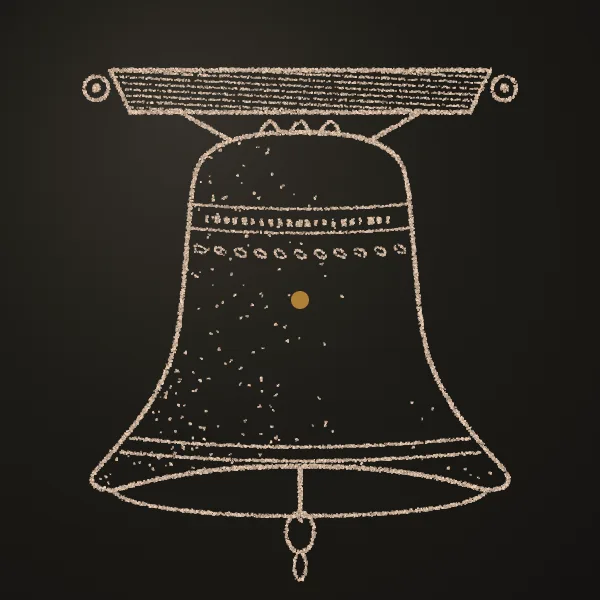
An iron clapper swings inside and strikes the thick sound bow near the lip. In English change ringing the bell itself swings through a full circle and the clapper catches it on the way.
Resonator Bell
A tuned bell's partials sit at 0.5, 1, 1.2, 1.5 and 2 times its prime: the hum, prime, tierce, quint and nominal. The tierce is a minor third, which is why bells sound faintly sad. The strike note we hear, about an octave below the nominal, is a virtual pitch built by the ear from the upper partials.
Body Open air
The bell is its own radiator: the whole bronze shell flexes and pushes the air.
Where it comes from
Bronze bells were cast in China around 2000 BC. Christian churches used them from the 5th or 6th century, and the Hemony brothers in the Netherlands worked out how to tune bells precisely in the 17th century. True-harmonic tuning, with all five main partials in place, came from Taylor's foundry in England in the 1890s. Bells are tuned by turning metal off the inside on a lathe; metal can only be removed, so a bell is cast slightly sharp.
Partials
0.5 : 1 : 1.2 : 1.5 : 2
Metal
bell bronze, copper and tin
Octave lower
about 8× the metal
Tuned by
lathe, inside
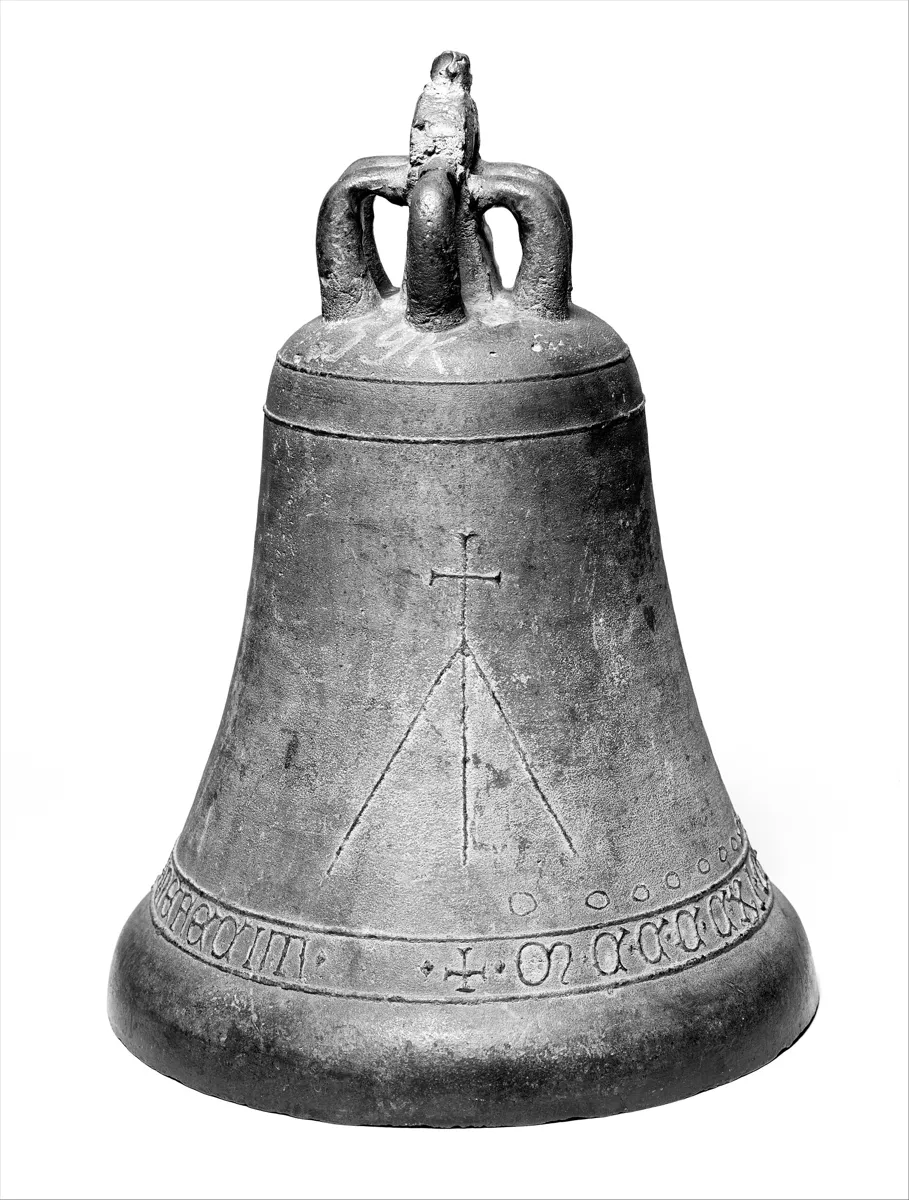
Photo: The Metropolitan Museum of Art (object: Master Marcus), Wikimedia Commons, CC0.
Worth knowing
The Tsar Bell in the Moscow Kremlin, about 200 tonnes, cracked in a fire in 1737 and has never been rung.
A full extent on eight change-ringing bells is 40,320 changes.
Experimental bells with a major third instead of the tierce were cast in the 1990s in the Netherlands.
Often said
“Big Ben is the clock tower.”
Myth. Big Ben is the Great Bell; the tower has been the Elizabeth Tower since 2012.