← Whyarium no. 43 Excite / Resonate
Instruments · Bars, bells & plates

Steelpan

An oil drum hammered into a bowl of domes, each one tuned not just to a note but to its overtones too.

Patch
Strike → Steel note → Open air
Class
H–S 111.241 · gong with divided surface
From
Port of Spain, Trinidad and Tobago
When
1930s–1940s
01

Exciter

what pushes

Out
02

Resonator

what rings
In
Out
03

Body

what moves the air

In
Out
04

Sand plate

where the still lines are
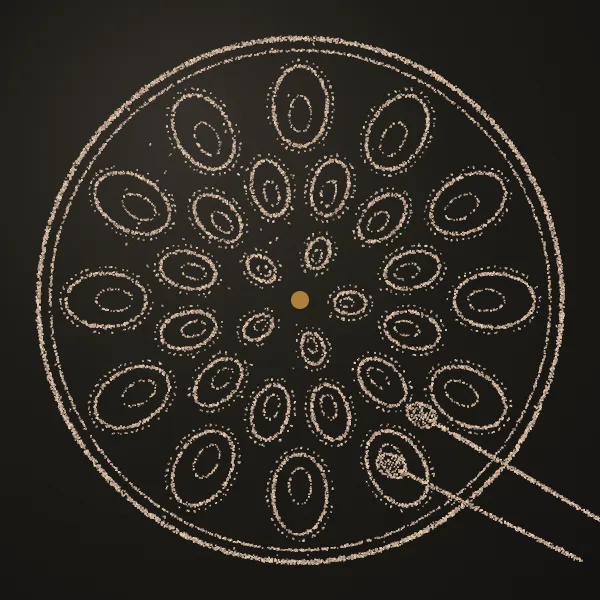
Steelpan drawn in sand on a dark metal plate
Note –– HzFigure –

In
Patch

Steelpan

An oil drum hammered into a bowl of domes, each one tuned not just to a note but to its overtones too.

Exciter Strike

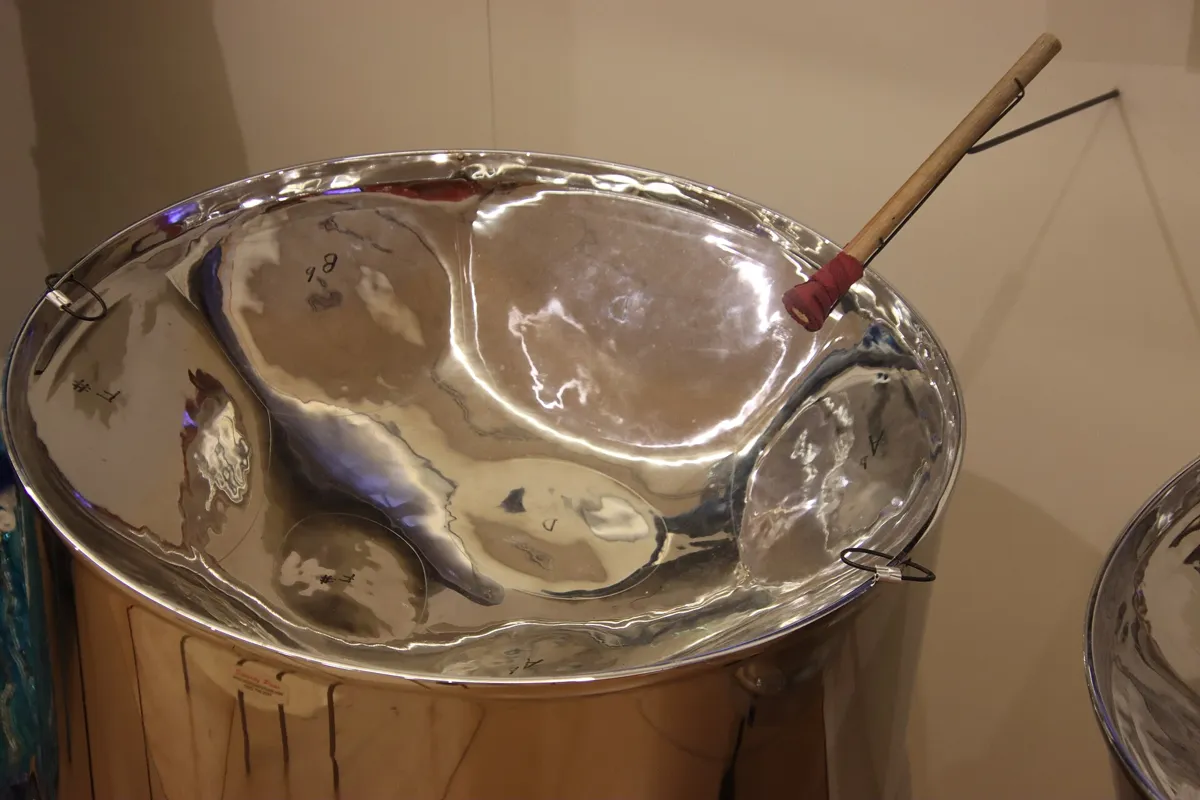
Short sticks with rubber-wrapped tips strike each note area. The rubber is soft enough to keep the clang of steel out of the attack.

Resonator Steel note

Each note is a dome hammered into the bowl and set apart by grooves. The tuner tunes its three lowest modes to the note, its octave and its twelfth (1 : 2 : 3), or to the note, octave and double octave. Neighbouring notes ring in sympathy, part of the pan's shimmer.

Body Open air

The steel itself radiates; the cut-down skirt of the drum shapes how much of the low sound gets out.

Where it comes from

Steelbands grew in Trinidad when the colonial authorities banned skin drums and then the bamboo bands at carnival, and players turned to metal containers. Oil-drum pans appeared around 1947. TASPO, formed for the 1951 Festival of Britain, was the first steelband with every instrument made from an oil drum. Trinidad and Tobago made the steelpan its national instrument in 1992.
Drum55 US gallons, ~572 mm across
Note modes1 : 2 : 3
Sticksrubber-tipped
National instrument1992
Photograph: Steelpan
Photo: Terry Ballard, Wikimedia Commons, CC BY 2.0.

Worth knowing

  1. A tuner lowers a note with glancing hammer blows across its top, and raises it by raising its centre or tapping its corners.
  2. The UN General Assembly declared 11 August World Steelpan Day in 2023.
  3. Credit for the pan is shared among many panmen, among them Winston "Spree" Simon, Ellie Mannette, Neville Jules and Anthony Williams.
Often said

“The steelpan is the only acoustic instrument invented in the 20th century.”

Myth, though often repeated: the waterphone and the hang came later, among others.