← Whyarium no. 43 Excite / Resonate
Instruments · Winds

Didgeridoo

A eucalyptus branch hollowed by termites, one low drone, and a mouth that reshapes it like speech.

Patch
Lips → Stopped pipe → Mouth cavity
Class
H–S 423.121.11 · end-blown natural trumpet
From
Arnhem Land, northern Australia
When
at least 1,000–1,500 years
01

Exciter

what pushes

Out
02

Resonator

what rings
In
Out
03

Body

what moves the air

In
Out
04

Sand plate

where the still lines are
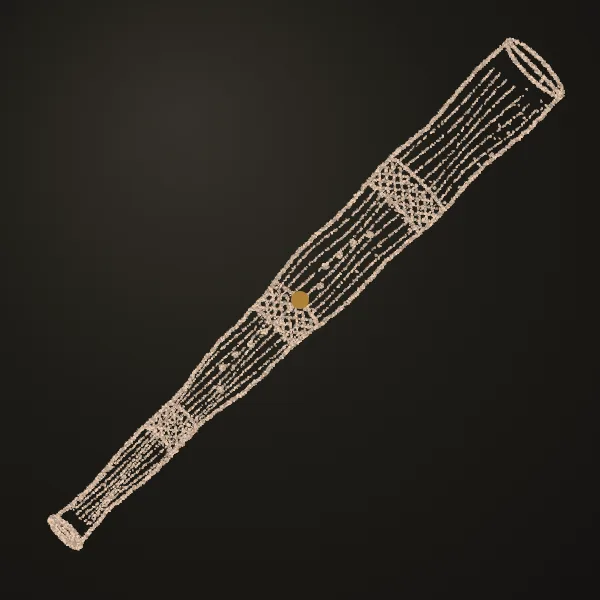
Didgeridoo drawn in sand on a dark metal plate
Note –– HzFigure –

In
Patch

Didgeridoo

A eucalyptus branch hollowed by termites, one low drone, and a mouth that reshapes it like speech.

Exciter Lips

The lips buzz into a ring of beeswax at the narrow end, as on a trumpet but loose and low. Players keep the drone going with circular breathing: air stored in the cheeks keeps the lips buzzing while they breathe in through the nose.

Resonator Stopped pipe

A slightly flaring tube about 1.2–1.5 m long. Like a stopped pipe it gives one deep fundamental; its higher resonances are not harmonic, so overblowing gives a separate "toot" rather than a scale.

Body Mouth cavity

The player's own vocal tract is part of the instrument. Its resonances are as strong as the tube's, so moving the tongue and lips cuts some bands out of the drone and lets others through, moving formants as vowels do in speech. On the plates below, each key is a mouth shape, not a note.

Where it comes from

Rock paintings of the instrument, known only from the Northern Territory, suggest it has been played for at least 1,000–1,500 years; there is no agreed date. Makers find trees already hollowed by termites by tapping the trunk. "Didgeridoo" is a Western word, probably imitating its sound; in Yolngu languages it is the yidaki.
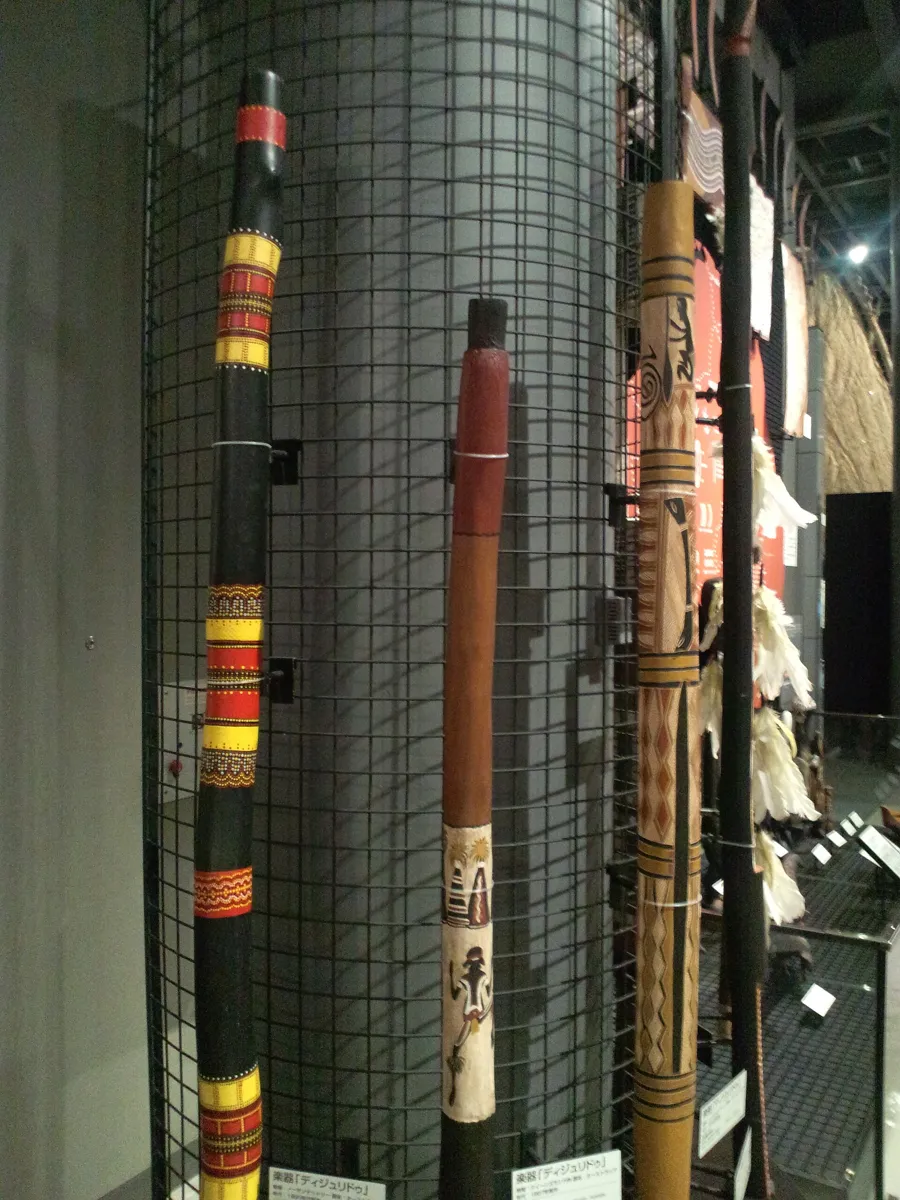
Length~1.2–1.5 m
Dronearound D2 (about 70 Hz) on this rack
Made fromtermite-hollowed eucalyptus
Mouthpiecebeeswax
Photograph: Didgeridoo
Photo: Yanajin33, Wikimedia Commons, CC BY-SA 3.0.

Worth knowing

  1. Much of the didgeridoo's timbre comes from the player's vocal tract, not from the wood.
  2. A study in the BMJ (2006) found that regular didgeridoo playing reduced daytime sleepiness and snoring in people with moderate sleep apnoea.
  3. Players often sing or growl into the instrument while buzzing, adding a second voice to the drone.
Often said

“The didgeridoo is 40,000 years old, the oldest wind instrument in the world.”

Myth. The rock-art evidence points to around 1,000–1,500 years.