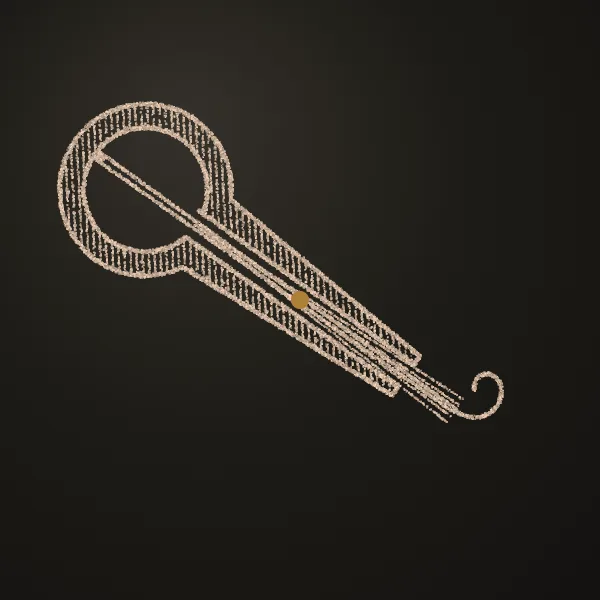
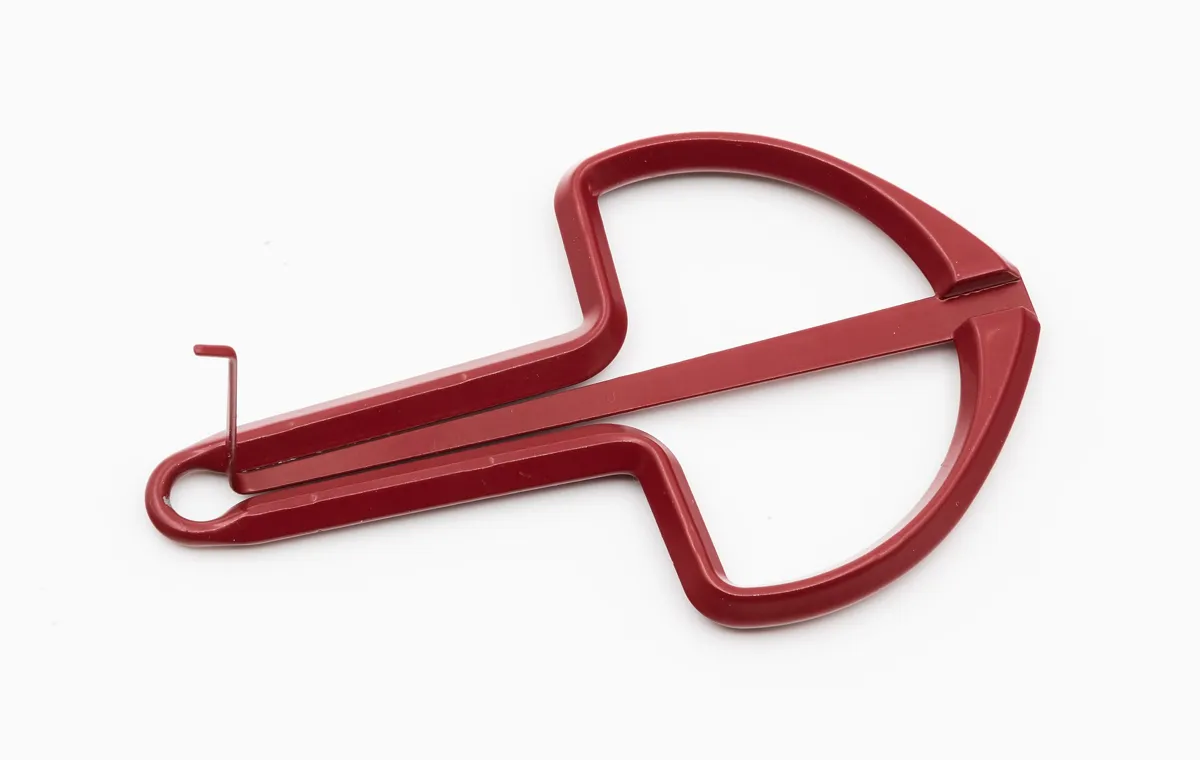
The player plucks the trigger at the end of a thin steel tongue, which twangs back and forth through the narrow slot of the frame held against the teeth.
Resonator Twanging tongue
Each pass of the tongue through the slot chops the airflow, so the drone is a dense, buzzy series of harmonics of one fixed note.
Body Mouth cavity
The mouth is the body, and the instrument. Shaping it with the tongue, cheeks and throat moves a single resonance up and down the harmonic series, so one harmonic at a time sings out above the drone, as in overtone singing. On the plates below, each key picks a harmonic, not a pitch.
Where it comes from
The oldest known jaw harps, made of bone about 4,000 years ago, were found at the Neolithic city of Shimao in Shaanxi, China. The English name first appears as "Jue harpes" in a customs book of 1481. It goes by many names: khomus in Yakutia, where it is a national symbol, drymba in Ukraine, morsing in South India, guimbarde in France.