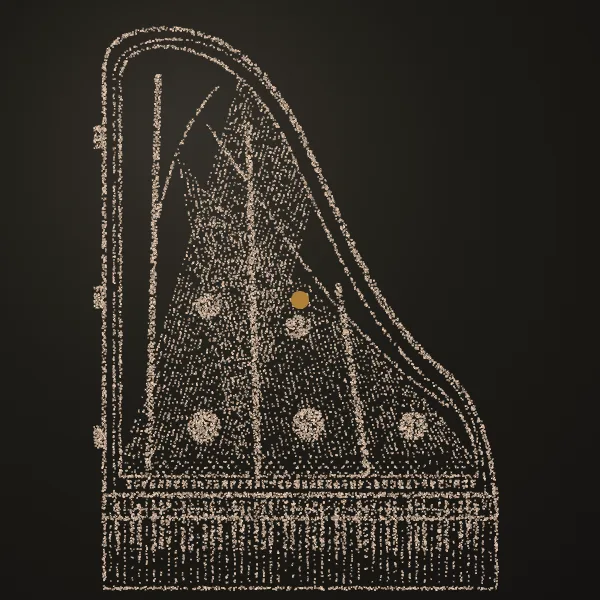
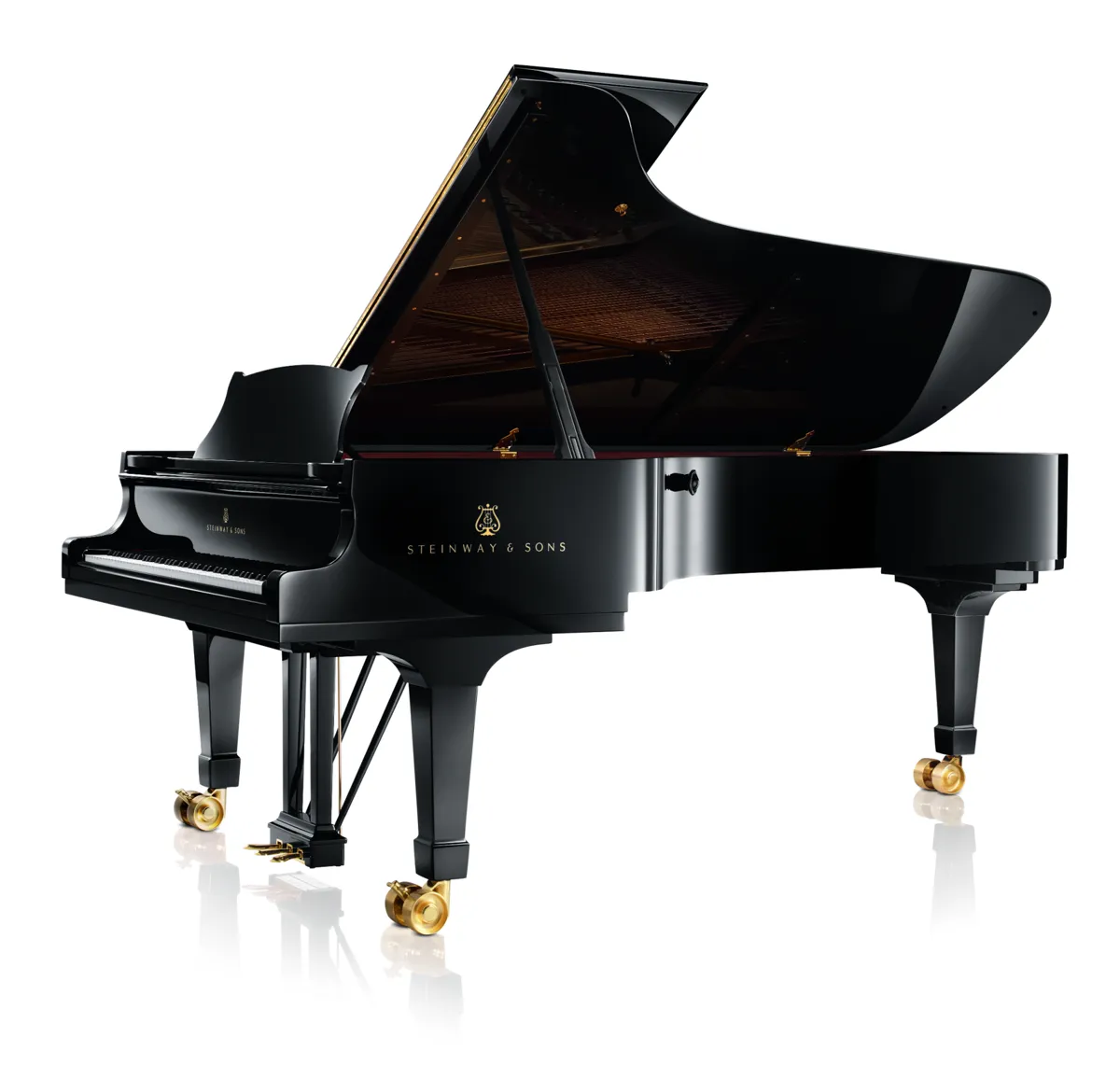
A key throws a felt hammer at the strings; the hammer bounces straight off, and a damper falls back onto the strings when the key is let go. Harder strokes throw the hammer faster, and a fast hammer brings out more high partials as well as more volume. That is the whole point of the name pianoforte, "soft-loud".
Resonator Stiff string
Steel strings, thick and very tight, wrapped in copper in the bass. Most notes have three strings tuned in unison. Thick strings are stiff, so their overtones run slightly sharp of the true harmonic series, and tuners stretch the octaves to match: the top of a piano is tuned sharp and the bottom flat.
Body Soundboard
A spruce soundboard under the strings, pressed up by bridges, radiates the sound. The cast-iron frame holds the strings' combined pull, around 18–20 tonnes on a concert grand.
Where it comes from
Bartolomeo Cristofori built the first pianos in Florence for the Medici court around 1700; a Medici inventory of that year lists his "arpicembalo". The oldest surviving piano, by Cristofori, dated 1720, is in the Metropolitan Museum of Art in New York. Iron frames, felt hammers and crossed bass strings arrived in the 19th century.